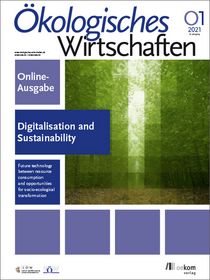
A solution for pressing sustainability challenges? Or an impediment for socio-ecological transformation? As of today, it is rather impossible to draw an overall conclusion on how digitalisation affects sustainability. In this first digital and open access issue of the journal Oekologisches Wirtschaften (Ecological Economy), the authors argue that there is no “black and white” answer to this question; instead, the answer is complex and overarching. The issue is edited by the research group “Digitalization and Sustainability”, a cooperation project between the Einstein Center Digital Future (ECDF)/Technical University of Berlin and the Institute for Ecological Economy Research (IÖW). 12 articles present the topics of the group’s science-policy workshop series “Forum Bits & Bäume“ (Forum on Digitalisation and Sustainability); the research group is funded by the German Federal Ministry of Education and Research (BMBF).
more
After it has triggered significant debate in Germany, the report on the precautionary post-growth approach is now published in English language. With it, the researchers are seeking a new consensus in the sustainability debate at a crucial time when billions are being poured into economic stimulus programs.
more
The circular economy is a concept that not only can help us reach climate neutrality and reduce environmental burden, but also support European economy to be innovative and competitive. The report “Products and circular economy“ presents the findings from more than one hundred EU-funded research and innovation projects, highlighting product circularity ideas related to design, manufacturing, use and afteruse. An independent expert report was compiled by the Directorate-General for Research and Innovation of the European Commission. IÖW scientist Dr Frieder Rubik contributed among nine independent experts to the identification of key lessons for policy makers with regard to possible future research and policy action.
more
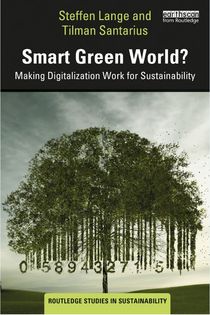
In their book „Smart Green World“, Steffen Lange and Tilman Santarius investigate how digitalization influences environmental and social sustainability. The information revolution is currently changing the daily lives of billions of people worldwide. At the same time, the current economic model and consumerist lifestyle needs to be radically transformed if society is to overcome the challenges humanity is facing on a finite planet. Can the much-discussed disruption potential of digitalization be harnessed for this purpose? The book is published in May 2020 and is result of the project „Digitalization and socio-economic Transformation“.
more
In order to offer an alternative to the platform capitalism of Amazon, Facebook & Co., there are efforts in many countries to build democratic platforms. What are the legal obstacles for democratically controlled online platforms? And by what means can such alternative platforms – among them platform cooperatives – be politically promoted? IÖW scientist Jonas Pentzien spent last year as a Research Fellow at the Institute for the Cooperative Digital Economy of the New School in New York City. Pentzien's conclusion: Although platform cooperativism is a global phenomenon, it is always a result of the socio-political context and national framework conditions in which it emerges. Existing global scenarios must therefore be supplemented by context-specific narratives.
more
For her entry “How does a future-fit economy take root? An analysis of diffusion and adoption of future-fit business practices” IÖW scientist Sabrina Schmidt receives the GAIA Masters Student Paper Award 2020. In her thesis, Sabrina Schmidt examines pioneering companies which deploy sustainable production and business practices. She asks how these future-fit approaches spread within the economy. She showed that a successful diffusion of these approaches may be more complex than commonly assumed. For example, conventional companies tend not to adopt sustainable business practices just because there are some future-fit small and medium enterprises (SMEs) that promote them.
more
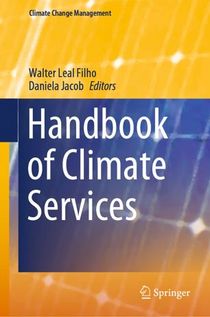
How should climate adaptation services be designed that support responsible stakeholders in implementing adaptation measures? IÖW researchers were involved in planning the German Climate Preparedness Portal (www.klivoportal.de) - a meta-portal for climate adaptation and climate information initiated by the Federal Government. On behalf of the Federal Environment Agency IÖW analysed the requirements and expectations of users. The results are published in the "Handbook of Climate Services" in the series "Climate Change Management" by Springer.
more
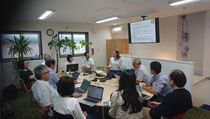
Scientist Dr. Swantje Gährs deals with energy prosumers in various projects for the IÖW. Prosumers are people who both consume and produce renewable energies. So far, her focus has been on prosumers in Germany and Europe. On a trip to China and Japan she explored the countries’ prosumer landscapes to find out how it is different to the German one. She met with scientists, NGOs, think tanks, policy consultants and citizens' initiatives in both countries and visited solar plants in Ruicheng (China), Sendai and Ueda (Japan). Japan and China are two of the largest solar energy producers in the world.
more
Complex transition processes require the design and implementation of effective governance models. Governments alone are not enough, since many different actors make relevant decisions. Therefore, both state and private actors should be involved in problem-solving. In June 2019, IÖW researcher Florian Kern contributed to several international conferences in Canada by addressing potential conceptions regarding the governance and management of sustainability transitions: the International Sustainability Transitions Conference (IST 2019) at Carleton University in Ottawa, the 4th International Conference on Public Policy at Concordia University in Montreal and a workshop for policy makers from various Canadian ministries
more
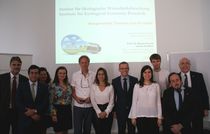
A group of parliamentarians from Brazil visited the IÖW on 3 June 2019 and discussed with energy expert Prof. Bernd Hirschl findings from many years of research at the IÖW on the German energy system transformation and the resulting recommendations for the design of environmentally friendly and climate-friendly energy systems.
more