For two days more than 50 specialists from 15 countries discussed current food consumption trends and necessary reforms in order to achieve a sustainable food system. Identified hotspots that call for interventions are, firstly, the damages to environment that are caused within the food chain, such as soil degradation, water pollution or eutrophication. Secondly, also health issues are high on the agenda. About a quarter of the world population suffers from nutritional problems: About 800 million people around the world lack adequate access to food, in contrast to at least one billion people overweight, especially in industrialized countries. The experts emphasised the need of strong governance structures and actions in order to make food consumption more sustainable.
more
Berlin aims to be climate neutral in the year 2050 – how this goal can be reached is to be shown by a team of experts from the Potsdam Institute for Climate Impact Research (PIK), the IÖW and others, on behalf of the Berlin Senate. "Europe and the whole world is monitoring the Berlin metropolis," PIK director Hans Joachim Schellnhuber says. "If the German capital is pioneering in climate protection, this is a contribution to maintain the two-degrees-limit in regard to global warming – to achieve this, states have to act as well as bold local authorities." Energy expert Bernd Hirschl from the IÖW, deputy head of the project: "A climate neutral Berlin will cooperate with the state of Brandenburg on different levels. We want to emphasize the economic advantages of climate neutrality".
more
Urban mobility is crucial for making Europe’s cities more sustainable. The key for improvement is concerted and goal-directed planning, say Europe’s leading mobility experts. It is important that the cities develop long-term goals for their respective mobility future. Last week, more than 60 professionals from 16 European countries discussed in Bratislava the trends, barriers and approaches for sustainable mobility in European cities. The experts agreed that it is necessary to focus on clever combinations of technological and infrastructural solutions with measures to stimulate changes on the demand side. In a nutshell, sustainable urban mobility in the future has to opt for clean technologies, smart infrastructures and to favour the change of modal split towards more walking, cycling and public transport.
more
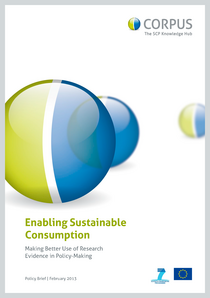
Although we know that consumption patterns must become more sustainable, this knowledge has not yet led to a respective response in European policy making. Following a pan-European effort, consumption experts have today released the policy brief “Enabling Sustainable Consumption”. The policy brief shows how obstacles interfering with sustainable consumption can be overcome, in order to foster a low-impact lifestyle. The European project “CORPUS – Enhancing the connectivity between research and policy-making in sustainable consumption” has examined three crucial policy sectors of sustainable consumption and production (SCP): Mobility, food and housing. Within a three-year process, policy makers and researchers have tested novel ways for sharing knowledge.
more
Modern Information and Communication Technologies (ICT) can have a great influence on shaping a more sustainable world. The mega-trends Cloud Computing and Smart Systems in the areas of energy, transport and housing, have the potential to substantially reduce environmental impacts and, thus, green Europe’s future. The time to adjust the future development of these technologies is now, say Europe’s leading ICT-specialists. Last week, more than 50 professionals from 20 countries across Europe, the US and Australia discussed in Vienna how ICT can increase energy and resource efficiency and make consumption more sustainable.
more
Today European science and policy experts released “The CORPUS Research Agenda for Sustainable Housing in Europe”. Having a significant impact on the environment, health and social cohesion, housing is widely seen as a major issue in the politics of sustainable consumption and production (SCP). More than 100 specialists from all over Europe have developed the research agenda in a unique joint effort. Within the agenda, they focus on the most urgent issues in sustainable housing. They allocate the identified hot research topics to four thematic strands that cover the economic and the social sides of sustainability as well as the environmental aspects of housing.
more
For two days European science and policy experts convened last week in Brussels to discuss Europe’s sustainable future. The “European Dialogue on Sustainable Consumption and Economic Growth” organised by the knowledge brokerage consortium RESPONDER addressed the challenges of the concept of “Greening the economy” in order to enable the formulation of adequate policy strategies. More than 50 professionals from 13 countries across Europe took part in the discussion. The IÖW is one of the partner institutions working together within RESPONDER.
more
The new edition of the International Journal of Emerging Techonologies and Society (iJETS) takes a comparative perspective on public engagement with emerging technologies on an international level. The special issue was edited by IÖW-experts Gerd Scholl, Ulrich Petschow and Jan-Peter Ferdinand. They say that the interrelation between technological path creation and its complex societal aspects is as close as never before. This has led to a significant renaissance in participatory and deliberatively motivated engagement activities, especially regarding nanotechnologies. The papers of this special issue display a wide range of participation cultures and institutional settings of engagement. They elaborate on the performance of deliberative dialogues, methodological aspects of engagement, and their relation to (political) decision-making contexts.
more
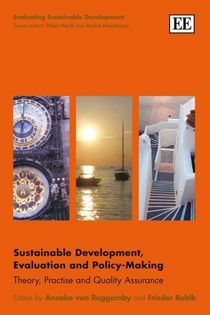
In times of financial crises and pressure to justify public spending, evaluation of projects, programs and policies increases. Sustainability, which has become a socially and politically widely accepted concept throughout Europe, therefore ought to be included to a greater extent within evaluation practices to assess social and ecological impacts. The authors of this book analyze in 15 chapters, amongst other things, the perception of sustainability-problems and the role of evaluation in the formulation, implementation and reformulation political measures. The book is a joint work of the IÖW and the Ecologic Institute.
more
Strengthening Research in Sustainable Mobility – the European knowledge brokerage consortium CORPUS uncovers mobility challenges and comes up with a research agenda for transforming current unsustainable mobility patterns // More than 100 experts from science and policy involved in debating emerging mobility topics
more