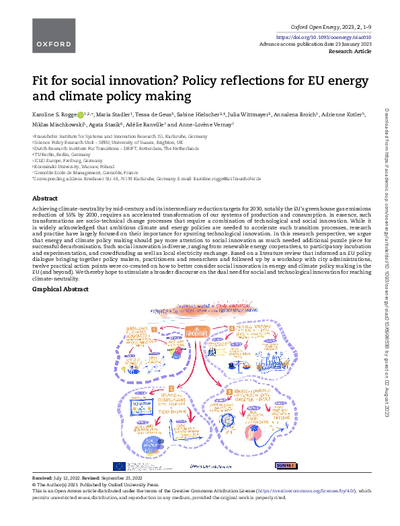



PaDiSo Participation in digitalized energy systems: Investigating social innovation processes
The centralised fossil energy system is going to be replaced by decarbonisation, decentralisation and digitalization. Actors from science and civil society have called for attention to the often neglected social dimensions of this transformation process. For a transformation of the energy system all actors - from private and municipal energy suppliers or grid operators to individual citizens - must undergo fundamental change processes that affect not only their role in the energy system, but also their routines, practices and cultural perceptions with regard to energy.
This cannot be achieved with technical innovations alone. The analysis of the emergence and diffusion of social innovations in the energy system is crucial in order to identify and overcome relevant barriers in this transformation process. PaDiSo examines the institutional settings and actor constellations that shape social innovations in the energy system in their interactions with wider processes of institutional change.
The aim of the PaDiSo project is to identify potentials and strategies to enable actors in the energy system to successfully cope with current and future challenges in this transformation process. The results are compiled in case study reports and a transformation manual and discussed in various formats with interested stakeholders from civil society, politics and the energy industry.
Publications